
How to automate social media posting without losing engagement

Contact Media House Ltd for professional media services. Reach us at 01983 241457 or admin@mediahouse.ltd to get started.
Automating social media posting can transform your digital marketing strategy. It saves time and boosts efficiency. But how do you automate without losing engagement?
The key is balance. Automation should enhance, not replace, personal interaction. This guide will show you how to achieve that balance.
Summary
Automate tasks to save time and keep things consistent. Use tools like Buffer, Hootsuite, or Sprout Social. These tools help you schedule posts during busy times and manage your content calendar. Maintain engagement by balancing scheduled posts with real-time, human interaction and personalised, on-brand messaging. Use analytics to check performance. Adjust timing and content mix as needed. Avoid over-automation, generic posts, and scheduling that works for all platforms. Blend evergreen content with timely responses and UGC to keep your presence dynamic and authentic.
Social media tools like Buffer and Hootsuite are essential. They help schedule posts and maintain consistency. Consistent posting keeps your audience engaged.
However, automation isn’t just about scheduling. It’s about understanding your audience. Analysing engagement metrics is crucial. It helps tailor content to what resonates most.
Personalisation is another vital aspect. Automated messages should feel human. Avoid sounding robotic to keep followers interested.
Automation also allows for strategic planning. You can schedule posts during peak engagement times. This maximises visibility and interaction.
Finally, remember to mix automated and real-time content. This keeps your social media presence dynamic and engaging. With these strategies, you can automate smarter, not harder.
Why Automate Social Media Posting?
Automation in social media management offers numerous benefits. Primarily, it saves significant time. Manually posting can be a time-consuming task.
Time saved can be redirected towards creating quality content. This ensures your posts captivate and engage your audience. Creativity doesn’t suffer due to routine tasks.
Automation brings consistency. Consistent posting keeps your brand in the audience’s mind. This consistency is crucial for maintaining interest and engagement.
Here are some key advantages of automating:
Automation also enhances accuracy. It minimises manual errors that can occur during posting. Correct and well-timed posts reinforce your brand’s professionalism.
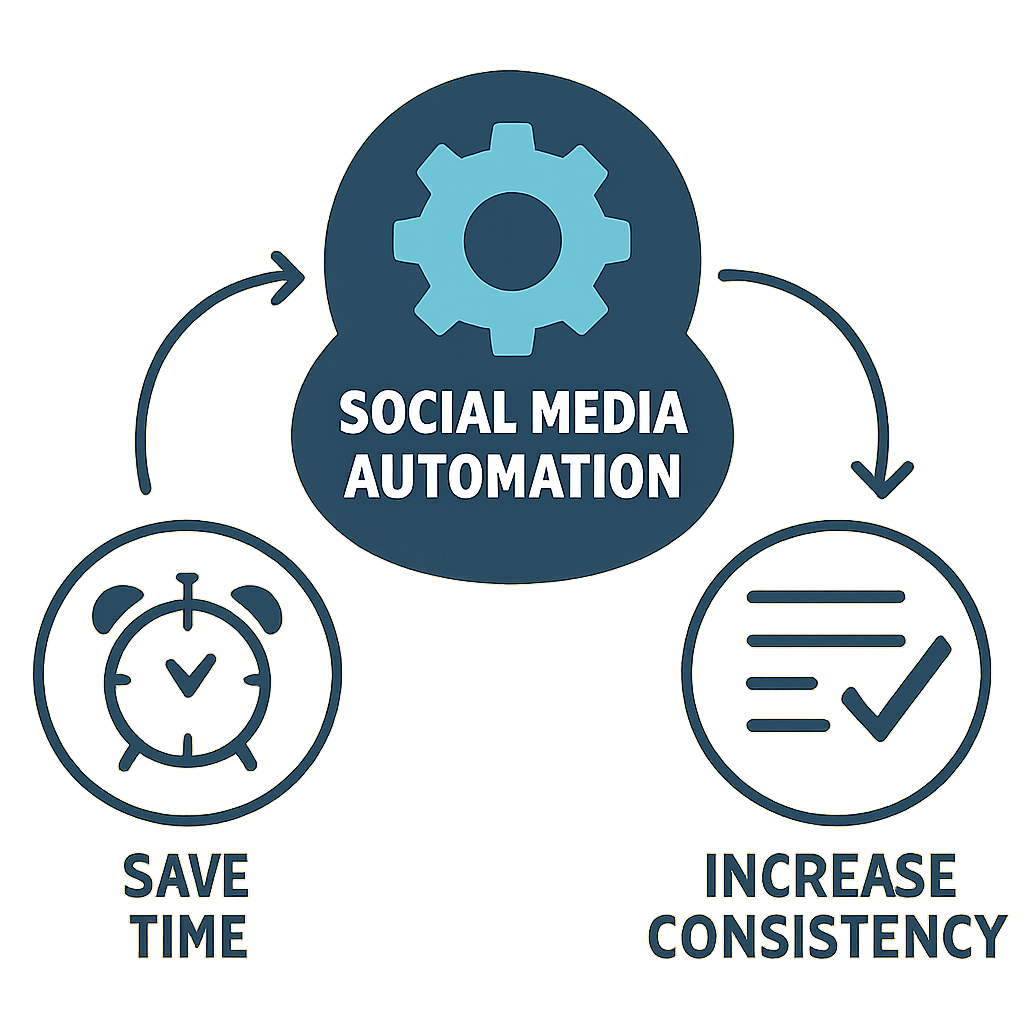
These benefits underscore why automation is essential. However, it’s important to balance automation with human interaction. By thoughtfully integrating both, you can craft a successful social media strategy. This strategic approach keeps your brand relevant and engaging.
The Risks of Over-Automation: How Engagement Can Suffer
Over-automation can lead to a disconnect with your audience. Relying too heavily on automated posts might make your content seem impersonal. This detachment can reduce engagement and make followers feel undervalued.
Robotic messages fail to address your audience’s unique needs. Followers appreciate interaction that feels genuine. Personalised engagement helps to build trust and loyalty. To keep interactions meaningful, balance automation with real-time connection.
Consider these potential pitfalls of over-automation:

Over-reliance on automation can impact how your brand is perceived. Brands that come off as detached can suffer reputational damage. This alienation can cause your audience to disengage, reducing your reach and effectiveness. Fostering a balance between human touch and technology is key to nurturing engagement.
Choosing the Right Social Media Tools for Automation
Selecting the appropriate tools is crucial for successful automation. A variety of social media tools can streamline posting and management tasks. These tools vary in functionality, so it’s important to choose those that align with your goals.
Before picking a tool, evaluate its features. Look for capabilities like content scheduling, analytics, and cross-platform posting. Some platforms also offer team collaboration features to enhance coordination.
Popular tools that offer comprehensive solutions include:
by oo verthing (https://unsplash.com/@ooverthing)
When choosing a tool, consider your budget and specific needs. Many social media tools offer different pricing tiers based on features. Analyze what you actually require before making a financial commitment.
It’s also useful to look at user reviews and ask for recommendations. Consider tools that offer free trials so you can test them first-hand. Testing helps you understand how intuitive the tool is to navigate.
by Noman Khan (https://unsplash.com/@nomankhannn)
Ultimately, the right tool should save you time and enhance efficiency. It should help you maintain a consistent posting schedule without compromising quality. With the right social media tools, your strategy can become more effective and engaging.
Building a Balanced Social Media Automation Strategy
Creating a balanced strategy is the cornerstone of effective social media automation. Start by defining your primary goals. Are you looking to increase brand awareness, drive traffic, or enhance engagement?
A balanced strategy involves a mix of automated and manual interactions. Automated posts ensure consistency, while personal interactions add authenticity. This approach keeps your audience engaged without missing timely opportunities to connect.
Create a strategic plan by identifying key content areas. This might include promotional content, educational posts, and user-generated content. Break down these categories into specific tasks and allocate them for automation where feasible.
by Behnam Norouzi (https://unsplash.com/@behy_studio)
It’s essential to regularly evaluate your strategy’s effectiveness. Use analytics to track engagement rates and adjust your automated content based on those insights. Change is constant on social media; staying adaptable is key to maintaining a balanced approach.
Finally, ensure that your automated strategy aligns with broader business objectives. This alignment guarantees that all your efforts are moving in the same direction, making your automation strategy not just efficient, but also purpose-driven.
Creating a Content Calendar for Consistency and Flexibility
A content calendar is essential for maintaining consistency in social media posting. It helps organise your posts and ensures timely content delivery. By visualising your posting schedule, you can plan content better and avoid last-minute scrambles.
When setting up a content calendar, start by choosing the right tool. Options like Google Calendar or Trello provide easy visual displays. They also enable team collaboration. Choose one that fits your workflow and use it to map out your posting schedule.
Flexibility is another benefit of a content calendar. It allows room for spontaneous posts, news jacking, or reacting to trending topics. This adaptability keeps your content fresh and relevant. A static schedule might hinder engagement, but a flexible one enhances it.
by wd toro 🇲🇨 (https://unsplash.com/@wdtoro)
Regular reviews of your calendar help adapt to changes or insights from analytics. Adjusting your calendar based on data ensures that your strategy remains optimal. Remember, consistency builds anticipation, while flexibility keeps the content engaging and timely.
Scheduling Posts for Maximum Engagement
Timing is crucial when it comes to social media posting. Scheduling your posts for peak engagement times increases visibility. Different platforms have different prime posting hours, so tailor your schedule accordingly.
Use analytics tools to determine when your audience is most active. These insights enable you to adjust posting times, maximising impact. Consistent engagement boosts algorithmic favour, placing your content before more users.
by lonely blue (https://unsplash.com/@lonelyblue)
Automation tools can handle scheduling based on the data you collect. They can post content at optimum times, ensuring that each post gets the attention it deserves. Proper scheduling enhances interaction, preventing your posts from getting lost in users’ feeds. Evaluate performance regularly to refine your timing for optimal engagement continuously.
Personalisation: Making Automated Posts Feel Human
Automation should not strip away the human touch from your posts. People connect with brands that feel human, not robotic. To maintain that connection, personalise your automated content whenever possible.
Craft messages that reflect your brand’s voice and personality. Simple adjustments can make posts feel tailored and genuine. Using first-person language and addressing your audience directly adds warmth to automated messages.
by Mohamed Nohassi (https://unsplash.com/@coopery)
Personalisation keeps your content relatable and encourages interaction. Always incorporate feedback from your audience to refine your approach. Striking the right balance between automation and personalisation elevates your engagement, ensuring your audience feels valued and heard.
Mixing Automated and Real-Time Content
Automation shouldn’t replace all your social media interactions. Mixing automated posts with real-time content keeps your online presence dynamic. It shows that there’s a real person behind the brand.
Real-time content can be reactive and responsive. For instance, joining trends or addressing current events as they happen engages your audience in a timely manner. It also demonstrates your brand’s awareness of what’s relevant.
Consider combining these strategies:
by Behnam Norouzi (https://unsplash.com/@behy_studio)
This blend of content types captures attention by keeping your feed lively and relevant. While automation ensures consistency, real-time interactions exhibit authenticity. They build a strong connection with your audience by providing both helpful and fun content.
Monitoring, Analytics, and Continuous Improvement
Monitoring and analysing your social media efforts is vital for growth. Automated posts should be part of an adaptable strategy that evolves based on data insights. Metrics reveal what works and what doesn’t.
Regularly check key performance indicators like reach, engagement rates, and conversion metrics. Use these analytics to adjust your strategy and improve results. Insights help in understanding audience preferences better.
Consider these monitoring practices:
by Joshua Hoehne (https://unsplash.com/@joshua_hoehne)
Continuous improvement ensures your strategy remains effective. Automation provides the foundation for reliable posting but flexibility keeps content relevant. By adapting based on analytics, you align your posts with audience needs and trends. This approach maximises the impact of your automated efforts, driving sustained engagement and achieving long-term social media goals.
Best Practices for Maintaining Engagement While Automating
To maintain engagement, combine automation with authentic interaction. Automation saves time but should not replace personal connection with your audience. Balance is crucial for success.
Start by crafting content that resonates with your audience. Your automated posts should reflect your brand voice and values. Consistency builds trust and loyalty over time.
Here are some best practices:
by Brett Jordan (https://unsplash.com/@brett_jordan)
Additionally, monitor conversations and join them when appropriate. Automation doesn’t mean ignoring your audience. Responding to comments, likes, and shares can enhance relationships. Show appreciation to followers who engage with your posts. Adapting these practices helps maintain a dynamic presence. Active participation and thoughtful automation foster a vibrant online community. Through strategic automation, you can enjoy both efficiency and engagement, ensuring your audience remains captivated and loyal.
Common Mistakes to Avoid in Social Media Automation
Automating social media can be a game-changer. However, there are pitfalls you need to avoid. Recognising common mistakes can help you maximise the benefits while minimising potential issues.
One frequent error is neglecting platform-specific nuances. Each platform has its own etiquette and audience expectations. Ignoring these differences can make your content feel out of place or irrelevant. It’s important to tailor your automated posts to fit the unique style of each platform.
Another mistake is over-scheduling posts and bombarding followers with content. This can lead to disengagement and even un-subscriptions.
Key mistakes to avoid:
by Behnam Norouzi (https://unsplash.com/@behy_studio)
Be mindful of these missteps as you automate your social media. A strategic, nuanced approach ensures that your automation efforts enhance rather than hinder your social media presence. Remember, thoughtful execution is the key to successful automation.
Conclusion: Automate Smarter, Not Harder
Incorporating automation into your social media strategy can yield great results. However, it’s vital to approach it thoughtfully. Balance automation with personal interaction to maintain engagement and build connections with your audience.
By choosing the right tools and refining your strategy, you can boost efficiency and effectiveness. It’s not just about automating tasks, but enhancing your social media presence overall. Embrace the power of automation with a strategic mindset and achieve your social media goals with ease. Keep evolving your tactics based on performance data to stay relevant and connected.
Ready to put this into practice?
At Media House we turn strategy like this into measurable growth. Let’s talk about how it applies to your brand.
Get in touch