
Many SaaS founders believe digital branding is simply designing a sleek logo or posting regularly on LinkedIn. This misconception costs businesses genuine market differentiation and customer trust. Digital branding encompasses far more than visual aesthetics or social media activity. It represents a comprehensive strategic approach that shapes how your target audience perceives, engages with, and advocates for your SaaS solution across every digital touchpoint. In 2026’s competitive landscape, mastering digital branding is no longer optional for SaaS companies seeking sustainable growth. This article clarifies what digital branding truly entails, explores its strategic components, and reveals how to leverage it effectively to enhance visibility, build trust, and drive measurable business outcomes.
Table of Contents
- Defining Digital Branding: Core Concepts And Strategic Value
- Components And Strategies Essential For Effective Digital Branding
- How Digital Branding Impacts SaaS Growth And Customer Engagement
- Measuring And Evolving Your Digital Branding Strategy In 2026
- How Media House Agency Supports SaaS Founders With Digital Branding
Key takeaways
| Point | Details |
|---|---|
| Strategic foundation | Digital branding shapes customer perception and drives engagement far beyond visual identity elements |
| Integrated approach | Effective branding combines strategy, identity, content creation, and customer experience seamlessly |
| Competitive advantage | SaaS companies investing in comprehensive branding achieve stronger market differentiation and accelerated growth |
| Implementation framework | Success requires clear strategy, consistent messaging, and strategic use of multiple digital channels |
| Continuous optimisation | Measuring impact through analytics enables ongoing refinement and improved branding effectiveness |
Defining digital branding: core concepts and strategic value
Digital branding extends far beyond creating attractive logos or maintaining active social media profiles. It represents the strategic orchestration of every digital interaction that shapes how customers perceive, understand, and connect with your SaaS brand. Digital branding involves a strategic approach combining visual identity, messaging, and customer experience delivered on digital platforms. This comprehensive definition matters because fragmented branding efforts waste resources and confuse potential customers.
The core components of effective digital branding work together as an integrated system. Visual identity establishes immediate recognition through consistent use of logos, colour palettes, and typography across all digital properties. Brand voice creates familiarity and trust by maintaining consistent tone, language patterns, and messaging across channels. Content strategy educates audiences whilst amplifying brand values through blogs, videos, case studies, and thought leadership. User experience and interface design ensure every interaction reinforces brand promises through intuitive, satisfying digital experiences. Customer engagement mechanisms build relationships through responsive communication, community building, and personalised interactions.
For SaaS companies specifically, strategic branding clarifies inherently complex offerings that potential customers struggle to evaluate. Strong branding transforms abstract software capabilities into tangible business value that resonates with decision makers. It builds differentiation in crowded markets where feature parity makes technical specifications insufficient for competitive advantage. Most importantly, comprehensive branding drives both customer acquisition by attracting high-fit prospects and retention by reinforcing value throughout the customer journey.
Digital branding must align directly with overall business goals and market positioning to deliver measurable impact. When your branding strategy connects to revenue targets, customer lifetime value objectives, and market share ambitions, it becomes a growth engine rather than a cost centre. This strategic alignment ensures every branding decision supports broader business outcomes.
Pro Tip: Map your digital touchpoints across the entire customer journey, from initial awareness through advocacy. Identify gaps where brand experience feels inconsistent or weak, then prioritise improvements based on impact on conversion and retention metrics.
Components and strategies essential for effective digital branding
Building a powerful digital brand requires orchestrating multiple components into a cohesive strategy that resonates with your target audience. Core elements like brand identity, content marketing, social media engagement, and UX design are critical for successful digital branding. Understanding how these elements work together enables SaaS marketers to create brands that drive measurable business outcomes.
Visual identity forms the foundation of brand recognition. Your logo, colour scheme, typography, and imagery create instant associations in customer minds. Consistency across all digital properties, from your website to email signatures, builds familiarity that translates into trust. However, visual identity alone cannot carry your brand. It must work in concert with other strategic elements to create meaningful differentiation.

Brand voice establishes personality and builds emotional connections. Whether your tone is authoritative and professional or conversational and approachable, consistency across channels creates familiarity that prospects find reassuring. Your voice should reflect your target audience’s preferences whilst remaining authentic to your company values. SaaS brands often struggle with voice, defaulting to jargon-heavy corporate speak that alienates potential customers. Effective voice balances expertise with accessibility.
Content marketing amplifies your brand by educating audiences whilst demonstrating thought leadership. Strategic content addresses customer pain points, showcases your unique perspective, and guides prospects through decision making processes. Blog posts, whitepapers, webinars, and case studies all contribute to brand perception when executed consistently and strategically. Content also feeds your search engine optimisation efforts, making your brand more discoverable to high-fit prospects.
Social media builds community and enables real-time engagement that traditional marketing channels cannot match. Platforms like LinkedIn, Twitter, and industry-specific forums allow you to participate in conversations, respond to customer feedback, and humanise your brand. The key lies in strategic platform selection and consistent, valuable participation rather than spreading resources thin across every available channel.
User experience and interface design translate brand promises into tangible interactions. Every click, scroll, and navigation decision either reinforces or undermines your brand positioning. Intuitive, satisfying experiences build trust and encourage deeper engagement. Poor UX creates friction that contradicts even the strongest brand messaging.
| Aspect | Traditional Branding | Digital Branding |
|---|---|---|
| Primary channels | Print, broadcast, outdoor | Websites, social media, email, apps |
| Interaction model | One-way communication | Two-way engagement and dialogue |
| Measurement approach | Surveys, focus groups | Real-time analytics, behavioural data |
| Adaptation speed | Slow, campaign-based | Rapid, continuous optimisation |
| Personalisation | Limited segmentation | Dynamic, individual-level customisation |
Pro Tip: Create a brand style guide that documents not just visual elements but also voice guidelines, messaging frameworks, and UX principles. This ensures consistency as your team grows and new channels emerge.
How digital branding impacts SaaS growth and customer engagement
The strategic value of digital branding manifests through tangible business outcomes that directly influence revenue and growth trajectories. SaaS companies with strong digital branding enjoy competitive advantage, increased customer trust, and higher conversion rates. Understanding these impacts helps justify branding investments and guides strategic priorities.
Brand visibility drives organic traffic and inbound leads by making your company discoverable when prospects search for solutions. Strong branding improves search engine rankings through consistent, high-quality content that earns backlinks and social shares. It also increases direct traffic as satisfied customers and advocates remember and return to your brand. This organic visibility reduces customer acquisition costs compared to paid advertising alone.
Consistent branding fosters trust, which proves crucial for SaaS subscriptions and renewals. Software purchases involve risk because customers commit to ongoing relationships rather than one-time transactions. Professional, cohesive branding signals stability and competence, reducing perceived risk. Trust built through consistent brand experiences translates directly into higher conversion rates and lower churn.
Strong digital branding differentiates in crowded markets where feature parity makes technical specifications insufficient for competitive advantage. When multiple solutions offer similar capabilities, brand perception becomes the deciding factor. Companies with distinctive, well-executed brands can command premium pricing because customers perceive greater value. This differentiation reduces price sensitivity and protects margins.
Better engagement increases customer lifetime value and referral potential. Brands that create meaningful connections inspire advocacy, turning customers into voluntary marketers. Engaged customers provide testimonials, participate in case studies, and recommend your solution within their networks. This advocacy delivers high-quality leads at minimal acquisition cost whilst reinforcing brand strength.
“Investment in comprehensive digital branding generates compounding returns as brand equity accumulates over time, creating sustainable competitive advantages that purely tactical marketing cannot replicate.”
The relationship between branding and growth operates through multiple reinforcing mechanisms. Strong brands attract better talent, making it easier to build high-performing teams. They command attention from partners and investors, opening doors to strategic opportunities. They create customer expectations that guide product development towards higher value features. These secondary effects amplify the direct marketing benefits of strong branding.
For SaaS companies specifically, branding influences the entire customer journey from initial awareness through renewal and expansion. At the awareness stage, distinctive branding cuts through noise to capture attention. During consideration, consistent brand experiences build confidence in your solution’s quality. At decision time, strong branding provides the emotional reassurance that tips prospects towards commitment. Post-purchase, cohesive brand experiences validate the decision and encourage expansion.
Measuring and evolving your digital branding strategy in 2026
Effective branding requires systematic measurement and continuous refinement based on data and market feedback. Continuous measurement and adaptation of branding strategies are essential in maintaining SaaS market relevance and growth. Without rigorous tracking, branding remains an act of faith rather than a strategic investment with predictable returns.
Key performance indicators for digital branding span multiple dimensions of business impact. Brand awareness metrics track how many people in your target market recognise and recall your brand. Tools like surveys, search volume data, and social listening platforms quantify awareness levels and trends. Engagement rates measure how actively audiences interact with your branded content across channels. High engagement signals that your brand resonates emotionally and intellectually with target customers.
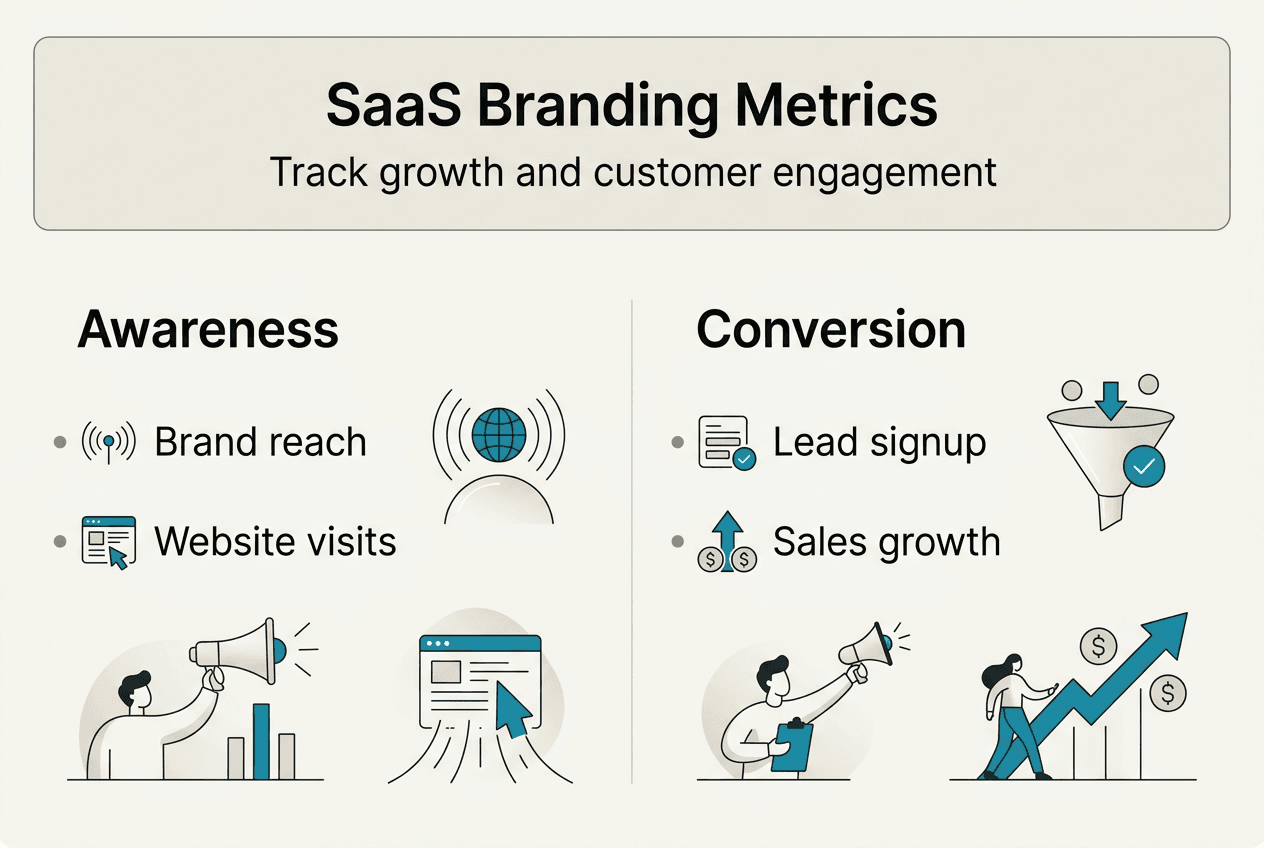
Conversion metrics connect branding efforts to revenue outcomes. Track how branded search traffic converts compared to generic search terms. Monitor conversion rates across different touchpoints to identify where brand strength drives decisions. Customer feedback, both quantitative through NPS scores and qualitative through interviews, reveals how customers perceive your brand versus competitors. Sentiment analysis tools process large volumes of mentions to detect shifts in brand perception.
| Metric Category | Specific Metrics | Tracking Tools | Strategic Significance |
|---|---|---|---|
| Awareness | Brand recall, search volume, social mentions | Google Trends, social listening platforms, surveys | Indicates market penetration and visibility |
| Engagement | Content interaction rates, time on site, social shares | Analytics platforms, social media insights | Reveals emotional connection and content relevance |
| Conversion | Branded search conversion, lead quality scores | CRM systems, analytics platforms | Connects branding to revenue outcomes |
| Perception | Net Promoter Score, sentiment analysis, brand attributes | Survey tools, sentiment analysis software | Measures brand strength versus competitors |
| Financial | Customer lifetime value, acquisition cost ratios | Financial systems, attribution models | Quantifies branding ROI and business impact |
Regularly review analytics and customer insights to detect shifts requiring strategic adjustments. Monthly reviews identify tactical optimisation opportunities whilst quarterly strategic reviews assess whether broader positioning remains effective. Market conditions, competitive actions, and customer preferences evolve constantly. Brands that adapt maintain relevance whilst rigid brands become obsolete.
Implementing an iterative branding evaluation process ensures continuous improvement:
- Establish baseline metrics across all key performance indicators before implementing branding changes.
- Define specific, measurable objectives for each branding initiative tied to business outcomes.
- Implement changes systematically, isolating variables where possible to enable clear attribution.
- Monitor leading indicators weekly to catch issues early whilst tracking lagging indicators monthly for strategic assessment.
- Conduct quarterly brand audits examining consistency across all touchpoints and identifying gaps or weaknesses.
- Gather qualitative feedback through customer interviews and team input to complement quantitative data.
- Adjust strategy based on integrated analysis of quantitative metrics and qualitative insights.
- Document learnings and update brand guidelines to institutionalise improvements.
Adapt content, messaging, and platform strategies in response to data and industry changes. If certain content formats drive disproportionate engagement, shift resources accordingly. When new platforms emerge where your audience congregates, establish presence strategically rather than reactively. As customer language evolves, update messaging to maintain resonance without sacrificing brand consistency.
Pro Tip: Avoid the common pitfall of prioritising vanity metrics like follower counts over business outcomes. Focus measurement on metrics that connect directly to revenue, retention, and market position. Balance quantitative data with qualitative feedback because numbers reveal what happens whilst conversations explain why it matters.
How Media House Agency supports SaaS founders with digital branding
Navigating the complexities of digital branding whilst managing rapid SaaS growth requires specialised expertise and strategic focus. Media House provides tailored digital marketing and branding services designed specifically for B2B SaaS companies seeking to enhance visibility, engagement, and conversions. Our approach combines deep understanding of SaaS business models with proven branding frameworks that drive measurable outcomes.
We help SaaS founders build powerful brands from strategic foundations through tactical execution. Our methodology begins with comprehensive research into your market position, competitive landscape, and target audience psychology. We then develop integrated branding strategies that align with your growth objectives and resource realities. From visual identity systems to content strategies and customer experience optimisation, we provide end-to-end support for SaaS founders navigating the branding journey. Explore how our specialised services can unlock your brand’s potential and accelerate sustainable growth in 2026’s competitive marketplace.
FAQ
What are the key differences between digital branding and traditional branding?
Digital branding emphasises online channels, real-time interactivity, and measurable engagement whilst traditional branding focuses primarily on offline presence through print, broadcast, and static media. Both share core elements like visual identity and messaging consistency, but digital branding enables two-way conversations, rapid adaptation based on data, and personalised experiences at scale. Traditional branding relies on campaign-based approaches with slower feedback loops, whereas digital branding supports continuous optimisation. The measurement approaches also differ fundamentally, with digital enabling granular analytics versus traditional’s dependence on surveys and focus groups.
How can SaaS founders start building a digital brand from scratch?
Begin by defining your core values, unique positioning, and target audience with precision. Develop a consistent visual identity including logo, colour palette, and typography that reflects your positioning. Establish brand voice guidelines that balance expertise with accessibility for your specific audience. Create foundational content that demonstrates thought leadership whilst addressing customer pain points. Leverage strategic social media channels where your prospects actively engage, focusing on consistent, valuable participation rather than broad presence. Investing in comprehensive branding from the start prevents costly repositioning later whilst accelerating customer trust and market differentiation.
What metrics should marketing leaders track to evaluate digital branding success?
Track brand awareness through search volume trends, social mentions, and aided/unaided recall surveys to measure market penetration. Monitor engagement rates across content and social channels to assess emotional resonance. Analyse conversion funnels comparing branded versus non-branded traffic to quantify branding’s revenue impact. Measure customer retention rates and Net Promoter Scores to evaluate brand strength’s effect on loyalty. Conduct sentiment analysis across review sites, social media, and customer feedback to detect perception shifts. Ensure continuous measurement through integrated dashboards that connect branding metrics to business outcomes, enabling data-driven optimisation and demonstrating return on branding investments to stakeholders.
Recommended
- Why invest in branding for SaaS: unlock growth in 2026
- Unlock the benefits of B2B SaaS branding in 2026
- Why use content marketing: key benefits for SaaS brands in 2026
- How to boost SaaS conversions: a comprehensive 2026 guide
- Why use AI for branding: Boost your brand’s impact in 2026 – Palmador Blog