

The digital landscape drowns in automated content, yet nearly 90% of people prefer human-created content over AI-generated alternatives. This disconnect creates confusion for B2B SaaS founders questioning whether content marketing truly delivers value. Many brands struggle to understand why they should invest in content when low-quality material floods their industry. This guide explains how strategic content marketing drives brand visibility and lead generation for SaaS companies. You’ll learn the tangible benefits, recognise pitfalls to avoid, and discover practical steps to implement effective content strategies that build trust and attract high-fit buyers.
Table of Contents
- Understanding The True Value Of Content Marketing For B2B SaaS
- How Quality Content Differs From Low-Value Marketing ‘Slop’
- Applying Content Marketing Strategically To Boost Brand Visibility And Leads
- Measuring Content Marketing Success And Avoiding Common Pitfalls
- How Media House Can Help You Elevate Your Content Marketing In 2026
Key takeaways
| Point | Details |
|---|---|
| Human content wins | Audiences consistently engage more with authentic, human-created content than automated alternatives |
| Durable brand recognition | Quality content builds lasting visibility beyond temporary advertising campaigns |
| Lead nurturing power | Educational content guides prospects through complex buying decisions |
| Avoid slop content | Low-quality generic material damages trust and reduces competitive distinctiveness |
Understanding the true value of content marketing for B2B SaaS
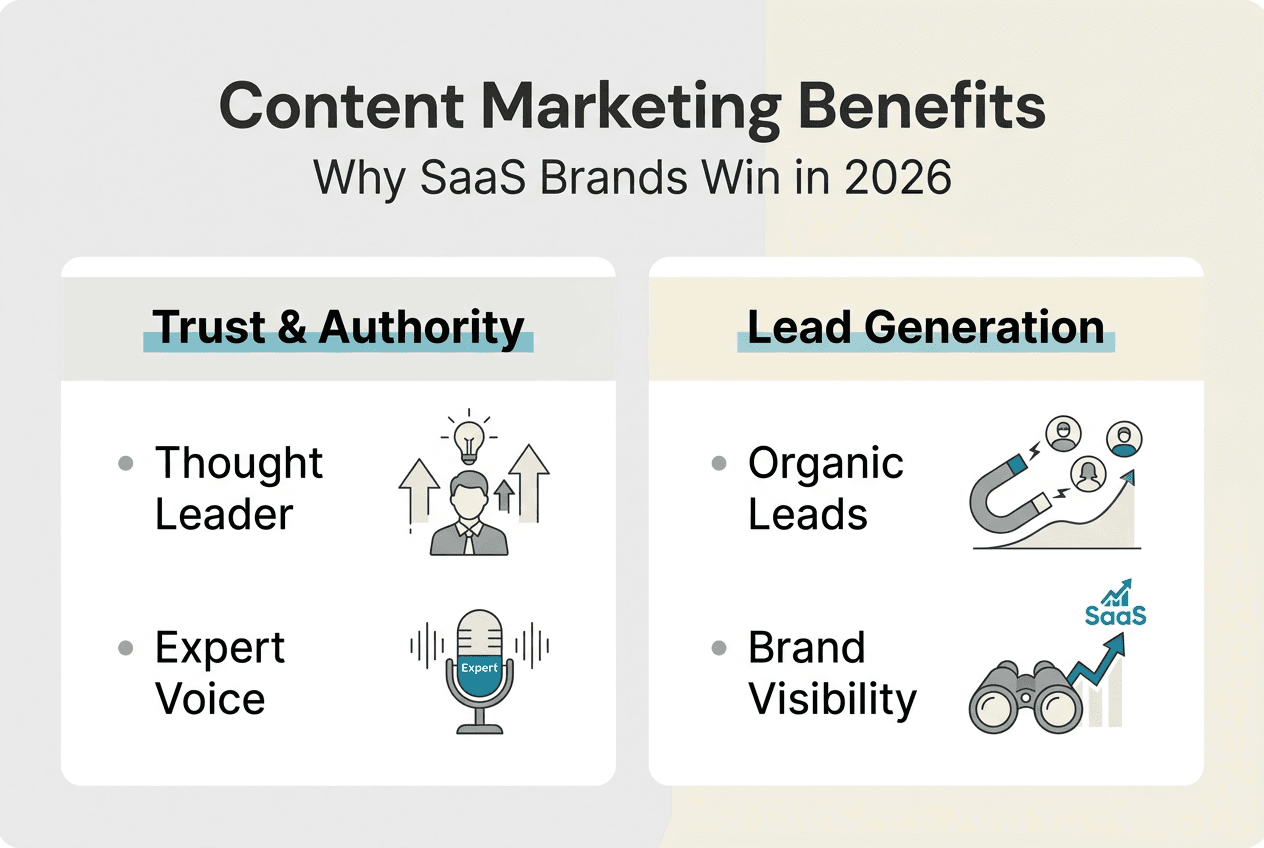
Content marketing helps B2B SaaS brands establish trust and authority by delivering genuine insights that prospects need. When you publish valuable content, you position your brand as a knowledgeable partner rather than just another vendor. This distinction matters enormously in SaaS, where buyers face complex product choices and need guidance to navigate technical decisions.
The emotional connection created by human-driven content sets successful brands apart from competitors relying on automated material. Nearly 90% of people prefer content created by humans over AI-generated alternatives. This preference stems from authenticity, nuance, and the ability to address specific pain points with empathy. Your audience recognises when content speaks directly to their challenges versus when it merely fills space on a webpage.
Key benefits of strategic content marketing include:
- Building sustained brand awareness that compounds over time
- Establishing thought leadership that differentiates you from competitors
- Nurturing qualified leads through educational journeys
- Supporting understanding B2B demand generation initiatives
- Creating assets that continue generating value long after publication
SaaS buyers particularly rely on educational content because they need to understand how products solve their specific problems. Your prospects research extensively before engaging with sales teams. They consume case studies, compare features, and seek expert perspectives. When your content answers their questions and addresses their concerns, you earn consideration before competitors even enter the conversation.
Pro Tip: Prioritise quality and relevance over sheer volume to stand out in saturated markets. Three exceptional articles that truly help your audience will outperform thirty generic pieces that add no distinctive value.
The compound effect of consistent, valuable content creates momentum that advertising alone cannot match. Each piece builds on previous work, strengthening your authority and expanding your reach organically.
How quality content differs from low-value marketing ‘slop’
The rise of low-quality, indistinguishable ‘slop’ content due to AI overuse dilutes trust across B2B marketing. This material floods search results and social feeds, making it harder for genuinely useful content to reach audiences. Understanding the distinction between meaningful content and slop helps you avoid common pitfalls that waste resources and damage brand reputation.
Slop content typically exhibits these characteristics:
- Generic advice that applies to any industry or situation
- Surface-level treatment of complex topics
- Repetitive phrasing and predictable structure
- Absence of specific examples or actionable insights
- Failure to reflect unique brand voice or perspective
High-quality content, by contrast, demonstrates depth, specificity, and genuine understanding of audience needs. It addresses particular challenges your prospects face, offers frameworks they can implement immediately, and reflects expertise earned through real experience. The difference becomes obvious when you compare how each type performs with actual buyers.

| Aspect | Quality Content | Slop Content |
|---|---|---|
| Tone | Conversational yet authoritative | Generic and robotic |
| Depth | Comprehensive with actionable insights | Surface-level overview |
| Audience focus | Addresses specific pain points | Broad and unfocused |
| Results | Builds trust and drives engagement | Creates noise without impact |
| Distinctiveness | Reflects brand voice and expertise | Indistinguishable from competitors |
Avoiding slop protects your brand reputation and improves SEO performance. Search engines increasingly prioritise content that demonstrates expertise, authoritativeness, and trustworthiness. When your material merely rehashes common knowledge without adding unique value, algorithms recognise this and reduce your visibility. More importantly, prospects who encounter low-quality content associate that mediocrity with your brand.
The relationship between AI-enhanced workflows in SaaS marketing and content quality requires careful balance. AI tools can accelerate research, suggest structures, and handle repetitive tasks. However, they cannot replace the strategic thinking, nuanced understanding, and authentic voice that human creators bring. Successful brands use AI to enhance efficiency whilst maintaining strong editorial oversight.
Consider how seasonal storytelling in B2B demonstrates the value of human creativity. Connecting your message to cultural moments requires sensitivity, timing, and brand awareness that automated systems struggle to replicate. This human touch transforms ordinary content into memorable experiences that strengthen relationships.
Pro Tip: Balance AI tools with rigorous human editorial oversight to safeguard quality. Let technology handle data gathering and initial drafts, then apply human expertise to refine, personalise, and ensure authenticity.
Applying content marketing strategically to boost brand visibility and leads
Implementing content marketing effectively requires systematic planning and execution. Human-focused content consistently outperforms automated content in audience trust and engagement, making strategic application essential for B2B SaaS success. Follow these sequential steps to build a content programme that delivers measurable growth.
- Research your audience deeply to understand pain points, decision criteria, and information needs at each buying stage
- Develop detailed buyer personas that reflect actual prospect behaviours and preferences
- Map content topics to customer journey stages from awareness through consideration to decision
- Create SEO-friendly content that balances search optimisation with genuine reader value
- Diversify content formats including blogs, whitepapers, case studies, and webinars to match audience preferences
- Establish consistent publishing schedules that build audience expectations and trust
- Promote content through owned, earned, and paid channels to maximise reach
- Analyse performance data to identify what resonates and refine your approach continuously
Your content strategy should address specific challenges your prospects face whilst guiding them towards solutions your product provides. This educational approach builds credibility without resorting to aggressive sales tactics. When prospects recognise that you understand their situation and offer genuine help, they naturally progress towards considering your solution.
| Metric | What It Measures | Target Benchmark |
|---|---|---|
| Organic traffic | Content discoverability and SEO effectiveness | 25% quarterly growth |
| Time on page | Content relevance and engagement | 3+ minutes average |
| Conversion rate | Lead generation effectiveness | 2-5% visitor-to-lead |
| Lead quality score | Alignment with ideal customer profile | 70%+ marketing qualified |
Integrating content marketing with mastering B2B SaaS lead generation initiatives amplifies results across both efforts. Content attracts prospects whilst lead generation mechanisms capture and nurture that interest. This synergy creates a system where each component strengthens the others.
The question of building a brand vs chasing views becomes critical when applying content strategy. Vanity metrics like page views matter less than meaningful engagement that indicates genuine interest. Focus on attracting the right audience rather than the largest audience. Ten highly qualified prospects who read your content thoroughly provide more value than a thousand casual visitors who bounce immediately.
Content types serve different purposes throughout the buyer journey. Blog posts build awareness and attract organic traffic. Whitepapers demonstrate deep expertise and capture lead information. Case studies provide social proof and address objections. Webinars create interactive experiences that accelerate relationships. Your mix should reflect where prospects need the most support in their decision process.
Measuring content marketing success and avoiding common pitfalls
Tracking effectiveness enables continuous improvement and justifies ongoing investment in content initiatives. Essential KPIs reveal whether your content achieves strategic objectives or merely consumes resources without delivering returns. Focus on metrics that connect directly to business outcomes rather than vanity measures that look impressive but lack meaningful impact.
Website traffic indicates content discoverability and reach. Monitor both volume and sources to understand which channels drive qualified visitors. Time on page reveals engagement depth, showing whether content holds attention or fails to resonate. Conversion rates demonstrate how effectively content motivates desired actions, from newsletter signups to demo requests. Lead quality measures whether attracted prospects match your ideal customer profile.
Common pitfalls undermine content marketing effectiveness:
- Over-relying on AI without sufficient human oversight and refinement
- Ignoring audience feedback and failing to adapt based on performance data
- Publishing inconsistently, which damages audience trust and algorithmic visibility
- Prioritising keyword stuffing over genuine reader value
- Neglecting content promotion after publication
- Creating content without clear strategic objectives
Best practices for measurement and optimisation include establishing baseline metrics before launching initiatives, setting realistic improvement targets based on industry benchmarks, and reviewing performance monthly to identify trends. Use analytics platforms to track user behaviour patterns and understand which topics generate the most engagement. Survey your audience periodically to gather qualitative insights that quantitative data cannot reveal.
The connection between unified AI and SEO strategy demonstrates how technology can enhance measurement capabilities. AI-powered analytics tools identify patterns humans might miss, suggest content optimisations, and predict which topics will resonate with target audiences. However, interpreting these insights and making strategic decisions still requires human judgment.
Consider how to streamline B2B marketing with AI whilst maintaining the authenticity that audiences value. Automation handles repetitive tasks like performance tracking and report generation, freeing human team members to focus on creative strategy and relationship building. This division of labour maximises efficiency without sacrificing quality.
Pro Tip: Regularly audit content for relevance and authenticity to maintain audience trust. Review older pieces quarterly to update statistics, refresh examples, and ensure recommendations remain current. This ongoing maintenance signals that you care about providing accurate, valuable information.
Remember that nearly 90% of people prefer human-created content over AI-generated alternatives. This preference should guide your measurement priorities. Track not just whether content performs well algorithmically, but whether it builds genuine relationships with prospects who become loyal customers.
How Media House can help you elevate your content marketing in 2026
Media House Ltd specialises in digital marketing and branding solutions designed specifically for B2B SaaS companies. We create strategic content systems that reduce sales friction, attract high-fit buyers, and build trust throughout the customer journey. Our integrated approach combines content marketing with demand generation and brand building to deliver measurable results.
Our team understands the unique challenges SaaS founders and marketing leaders face when implementing content strategies. We handle everything from initial research and strategic planning through content creation, promotion, and performance analysis. This comprehensive support ensures your content programme stays aligned with business objectives whilst adapting to market changes.
Partnering with experienced specialists helps you avoid common pitfalls and accelerate time to results. We bring proven frameworks, industry insights, and creative expertise that internal teams often lack bandwidth to develop. Our B2B SaaS lead generation expertise ensures content initiatives integrate seamlessly with broader revenue goals.
Pro Tip: Partnering with experts ensures up-to-date strategies and avoids common pitfalls. The content marketing landscape evolves rapidly, and maintaining internal expertise across all necessary disciplines requires significant investment. Specialist agencies provide that knowledge without the overhead of full-time hires.
FAQ
What is content marketing and why does it matter for SaaS companies?
Content marketing involves creating and distributing valuable material that attracts and engages target audiences without directly promoting products. For SaaS companies, this approach builds trust and educates prospects about complex solutions. The educational nature of content helps buyers navigate technical decisions and understand how products solve specific problems. This foundation of trust significantly shortens sales cycles and improves conversion rates.
How can I measure the success of my content marketing efforts?
Track key performance indicators including website traffic, engagement time, lead conversions, and lead quality scores. Use analytics tools to monitor user behaviour patterns and identify which content types generate the most valuable interactions. Review performance data monthly to spot trends and adjust your strategy accordingly. Combine quantitative metrics with qualitative feedback from sales teams and customers to gain complete insight into content effectiveness.
Why is human-created content preferred over AI-generated content?
Human content feels authentic, relatable, and trustworthy because it reflects genuine expertise and understanding. Nearly 90% of people prefer human-created content over AI-generated alternatives. AI content often lacks nuance, fails to address specific contexts, and can feel generic or repetitive. Audiences recognise when material comes from real experience versus automated generation, and they trust human perspectives more when making important business decisions.
What types of content work best for B2B SaaS lead generation?
Educational blogs, in-depth whitepapers, detailed case studies, and interactive webinars consistently perform well for B2B SaaS lead generation. Each format serves different stages of the buyer journey. Blogs attract initial awareness, whitepapers demonstrate expertise during consideration, case studies provide proof during evaluation, and webinars create personal connections that accelerate decisions. Your content mix should address buyer pain points at each decision stage whilst showcasing how your solution delivers value.
Recommended
- SaaS Marketing Agency for Effective Digital Strategies – Media House Agency
- Why Video Marketing is the Visibility Channel SaaS & B2B Brands Can’t Ignore – Media House Agency
- From Awareness to Affinity: Building a SaaS Brand People Trust – Media House Agency
- A Year Of Growth: Lessons From A Busy SaaS Marketing Season